Hot-Dip Galvanizing for the Solar Industry: Protecting Steel Support Structures
A photovoltaic installation relies on more than modules and electrical equipment. Its supporting structures must continue to perform throughout a long operating life, often while remaining permanently exposed to outdoor conditions.
Hot-dip galvanizing for solar structures is one method of protecting fabricated steel components against corrosion and limiting the deterioration associated with long-term environmental exposure.
Steel structures used in photovoltaic installations
Depending on the system design, steel may be used for frames, profiles, posts, supports and other structural components.
Ground-mounted solar installations are a particularly clear example: large numbers of structural elements may remain outdoors continuously throughout the operating life of the plant.
Corrosion protection therefore needs to be considered as part of the overall specification of the supporting structure rather than as an isolated finishing operation.
Why installation environment matters
Atmospheric corrosion requires moisture and oxygen, but the rate at which steel corrodes varies considerably with environmental conditions.
A solar farm in a rural inland location may experience very different corrosion stresses from a plant near the coast or in an industrial area. Salinity, atmospheric contaminants, rainfall, humidity and surface wetness can all affect the aggressiveness of the environment.
As a result, it is misleading to assign one universal service-life figure to a galvanized coating.
ISO 14713-1 provides guidance on the corrosion resistance offered by zinc coatings in a variety of environments and highlights the importance of considering both design and exposure conditions.
How hot-dip galvanizing protects photovoltaic steelwork
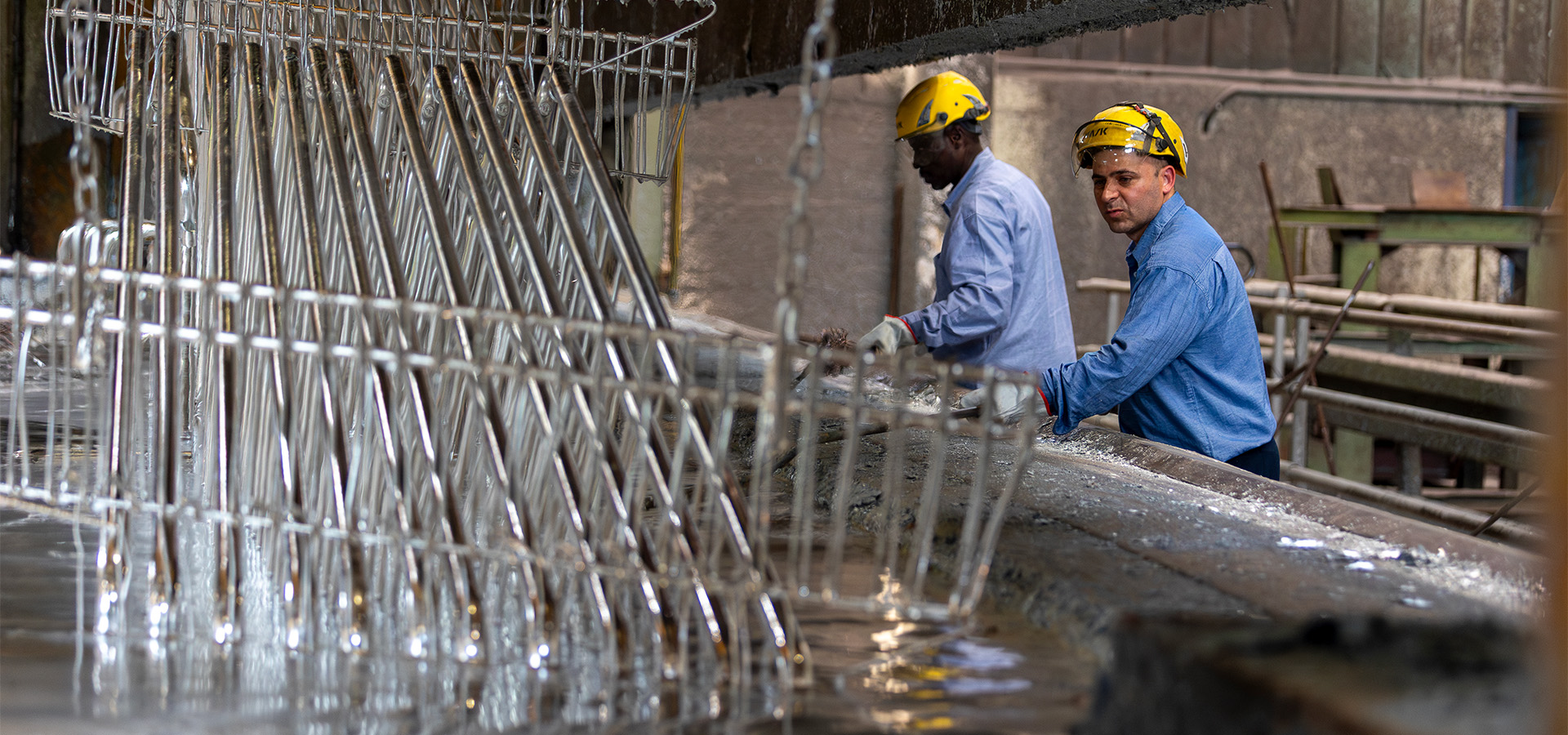
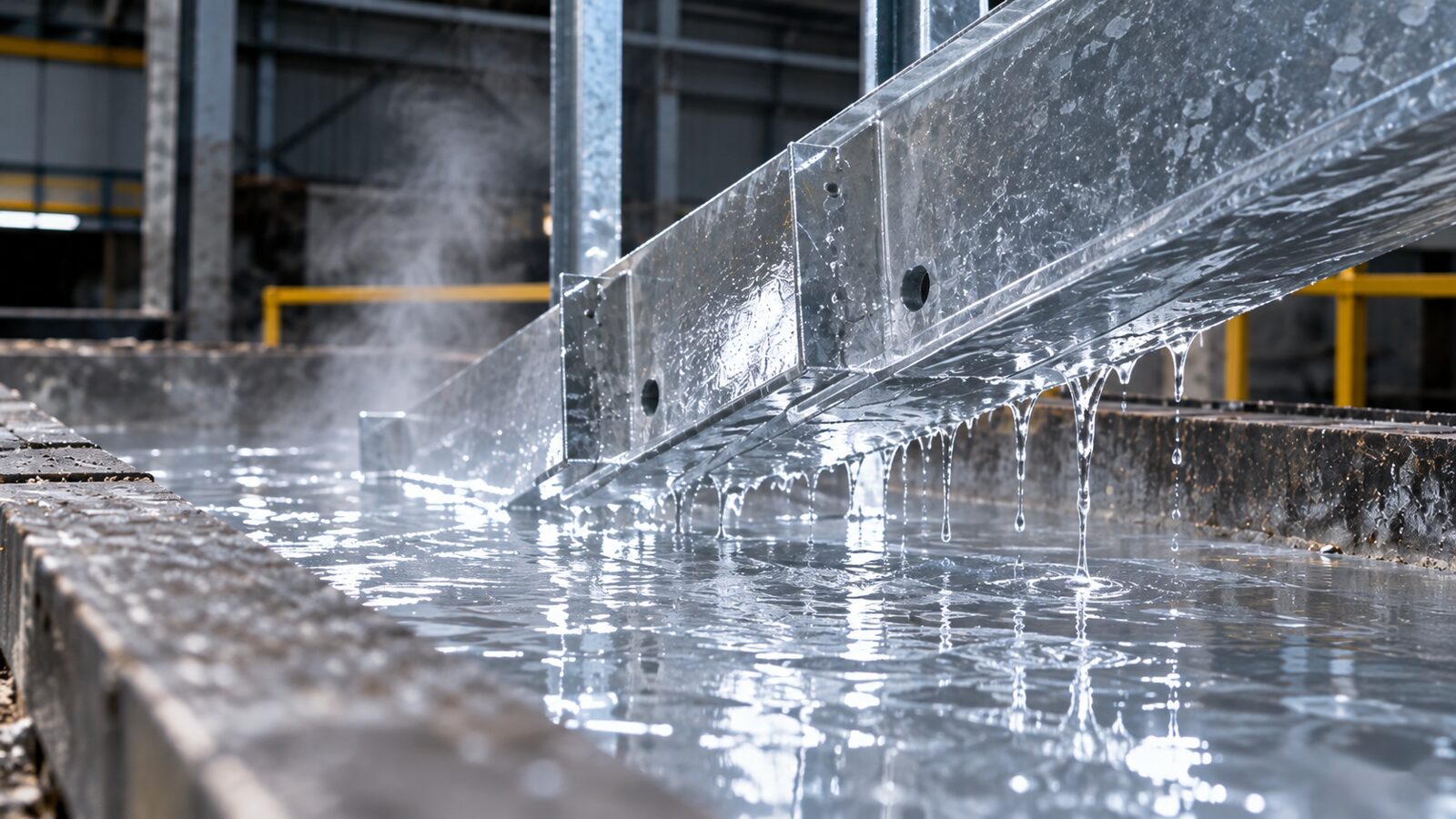
During hot-dip galvanizing, properly prepared fabricated steel is immersed in molten zinc. A reaction between the zinc and the steel creates a metallurgically bonded coating.
The coating provides barrier protection, physically separating the steel substrate from the surrounding environment.
Zinc also provides an additional electrochemical mechanism. Because it is less noble than steel, it acts sacrificially, helping protect exposed steel at small local discontinuities or areas of damage.
For components expected to remain outdoors for extended periods, this combination is particularly relevant to long-term corrosion management.
What determines the durability of galvanized solar structures?
Galvanizing performance should always be considered in relation to the specific project.
Relevant factors include:
- environmental corrosivity;
- zinc coating thickness;
- exposure to salts and pollutants;
- local moisture and wetting conditions;
- component design and geometry;
- mechanical damage or unusual operating conditions.
The expected performance of a zinc coating is therefore better assessed through the relationship between coating characteristics and environmental exposure than through a generic number of service years.
Reducing maintenance requirements over the plant lifecycle
Large photovoltaic installations may contain thousands of structural components distributed over extensive areas. Maintenance of these structures requires labour, access and operational planning.
An appropriately specified corrosion protection system can reduce the frequency of coating maintenance and repair, which is particularly valuable for remote sites and large ground-mounted arrays.
This makes lifecycle requirements an important part of material selection. The initial treatment cost is only one factor; accessibility, inspection requirements and future maintenance should also be considered.
Standards and design considerations
For fabricated iron and steel articles within its scope, EN ISO 1461 specifies the general properties and test methods for hot-dip galvanized coatings.
ISO 14713-1 provides complementary guidance concerning the design of articles to receive zinc coatings and the corrosion resistance that zinc can provide under different exposure conditions.
Component design also matters. Hollow sections, enclosed areas and complex geometries need to be designed appropriately for the galvanizing process. Zincol Lombarda provides technical guidance on material preparation, including the importance of venting and drainage for hollow or tubular structures.
Matching corrosion protection to the project
For photovoltaic structures, the key question is not simply how long galvanizing lasts. The more useful question is whether the coating specification is appropriate for the component, installation environment and intended service life.
Assessing these variables before production helps integrate corrosion protection into the design of the supporting structure rather than addressing it only after fabrication.